Why Your Home’s Air Might Be More Polluted Than You Think
An air quality check at home is essential because the air inside can be far more polluted than you realize. Here’s a quick guide:
Quick Answer: 3 Ways to Check Air Quality at Home
- Use a consumer-grade air quality monitor – Measures PM2.5, VOCs, CO2, humidity, and temperature in real-time ($50-$300).
- Purchase specific test kits – Test for individual pollutants like radon (long-term kits recommended), mold, or use carbon monoxide detectors.
- Hire a professional service – Get comprehensive testing by certified experts using AIHA-accredited laboratory analysis for accurate identification of all pollutants.
While outdoor smog is a visible threat, the air inside your home often poses a greater, unseen risk. The EPA reports that indoor air can be 2-5 times more polluted than outdoor air—a significant concern given we spend about 90% of our time indoors.
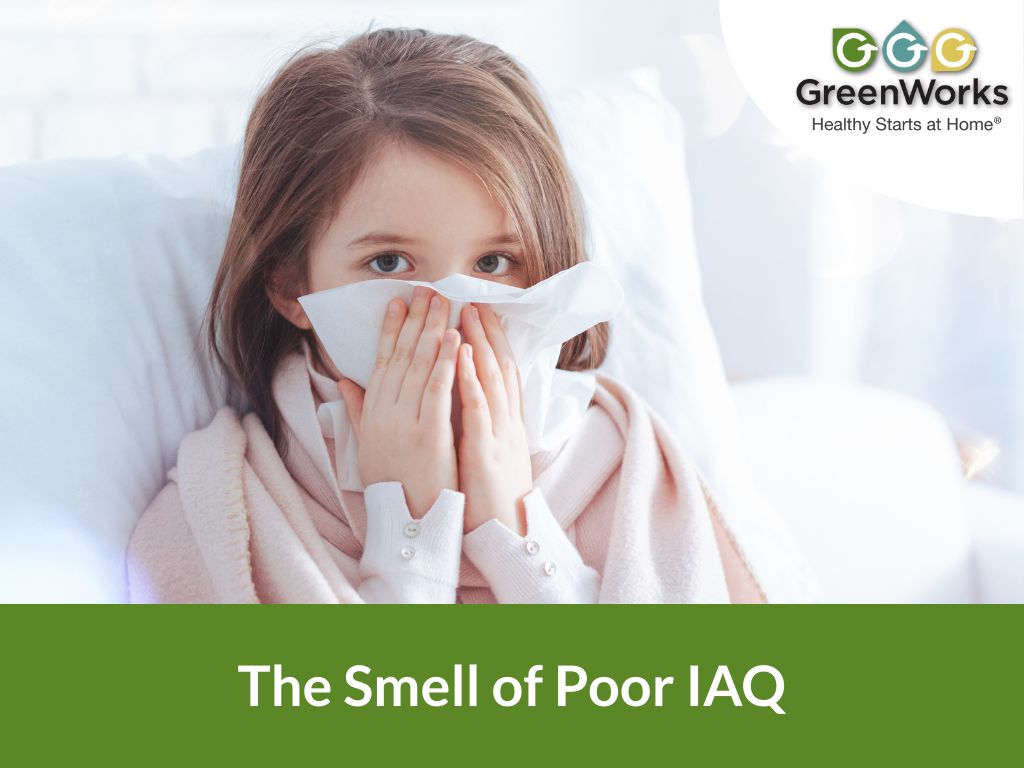
Poor indoor air quality can cause headaches, fatigue, and respiratory issues, and worsen asthma. For New Jersey homeowners, these symptoms, along with moisture or mold, often signal underlying environmental problems.
Fortunately, testing your home’s air is straightforward. This guide will explain DIY and professional options, what to test for, and how to interpret the results. Testing empowers you to protect your family’s health and make informed decisions about your home.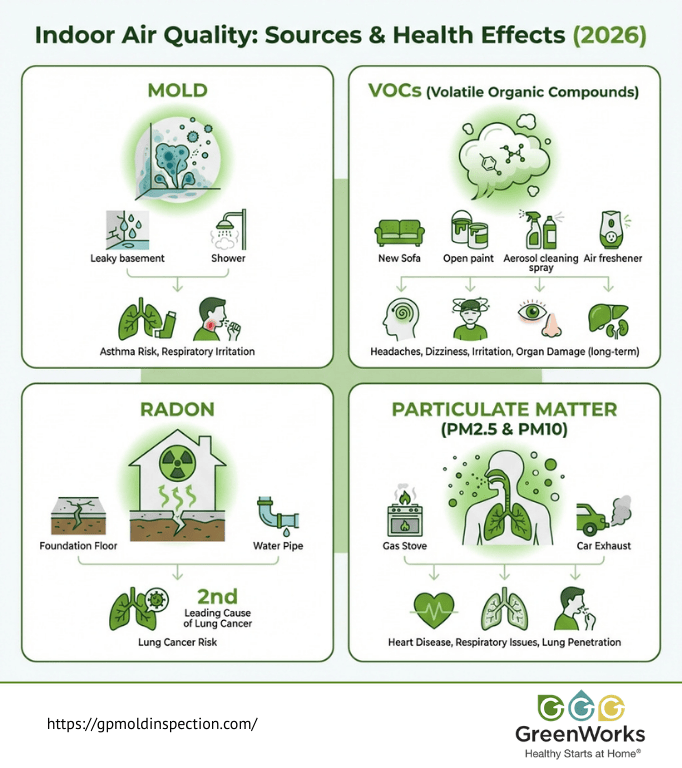
A Practical Guide to Your Air Quality Check at Home
When starting an air quality check at home, understanding what you’re looking for is the first step. Let’s dig into the common culprits and why they matter.
Identifying Common Indoor Pollutants and Their Health Effects
Indoor air pollutants come in many forms, each with its own sources and potential health impacts. Knowing what to look for can help pinpoint issues in your home.
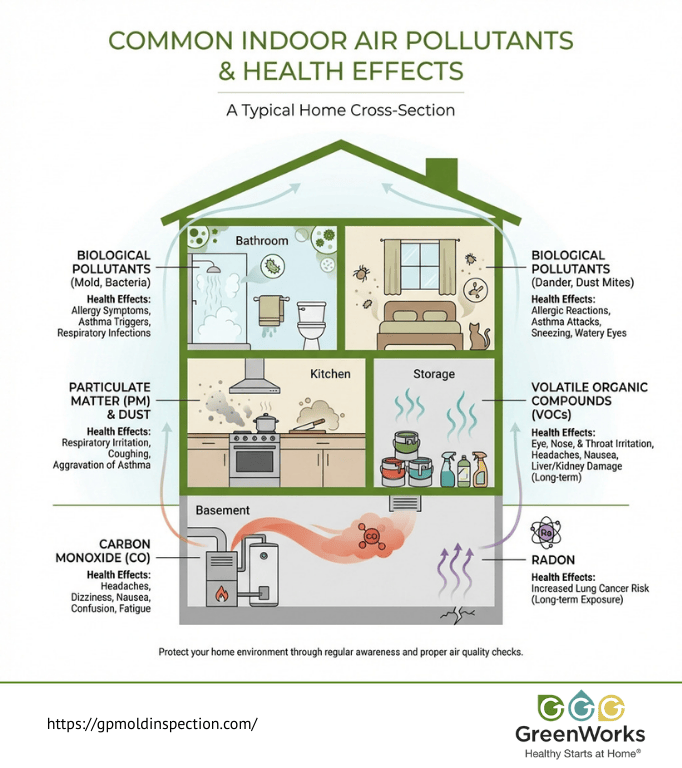
Particulate Matter (PM2.5 & PM10) These are tiny airborne particles from sources like cooking, smoke, dust, and outdoor pollution. The smallest, PM2.5, are particularly dangerous.
- Health Effects: PM2.5 can penetrate the lungs and bloodstream, contributing to heart disease and asthma, while both particle sizes cause respiratory irritation.
Volatile Organic Compounds (VOCs) VOCs are gases released from common household products like paints, cleaners, new furniture, and building materials. That “new” smell after a renovation is often VOCs off-gassing.
- Health Effects: VOCs can cause headaches, dizziness, and nausea. The EPA warns that long-term exposure can lead to organ damage, and some are known carcinogens.
Carbon Monoxide (CO) Known as the “silent killer,” CO is a colorless, odorless gas produced by the incomplete burning of fuels in appliances like furnaces, water heaters, and gas stoves.
- Health Effects: CO poisoning mimics flu symptoms (headache, nausea, dizziness) and can quickly lead to unconsciousness and death at high concentrations.
Radon Radon is a naturally occurring radioactive gas that seeps into homes from the ground through cracks in the foundation. It is invisible and odorless.
- Health Effects: Radon is the second leading cause of lung cancer, responsible for an estimated 21,000 lung cancer deaths annually in the U.S.
Biological Pollutants These are living organisms or their byproducts, including mold, bacteria, viruses, pet dander, and dust mites. They are among the most Common Home Enviro Hazards.
- Mold: Thrives in damp areas and can increase the risk of asthma by 50% with long-term exposure.
- Bacteria and Viruses: Spread through the air, especially in poorly ventilated spaces.
- Dander, Dust Mites, and Pollen: Common allergens that trigger respiratory symptoms.
DIY vs. Professional: Choosing Your Testing Method
When considering an air quality check at home, you have two main paths: do-it-yourself (DIY) testing or hiring a professional.
DIY Methods A DIY approach is a great starting point for general awareness. Consumer-grade monitors offer real-time data on common pollutants like PM2.5 and VOCs, helping you spot trends. Single-use kits test for specific threats like radon or mold. While DIY methods are affordable and empowering, they have limitations. Monitors may lack precision, and kits only provide a snapshot, often without context for interpretation.
Professional Testing Professional testing is necessary for complex issues or unexplained health symptoms. Certified experts use advanced, calibrated equipment for a comprehensive analysis of a wider range of pollutants, including specific mold types, asbestos, and various VOCs. At GreenWorks Environmental, our team of building biologists and IAQ professionals provides context, identifies hidden sources, and offers actionable solutions.
When to Hire a Professional:
- Persistent, unexplained health symptoms (headaches, fatigue, respiratory issues).
- After renovations or in new construction to check for off-gassing.
- During real estate transactions to uncover hidden problems.
- If you see significant mold or notice persistent musty or chemical odors.
- If your home is in an area with known environmental risks like radon.
- Following any significant water damage or leak.
Choosing the right expert is crucial. For reliable results, select a company with certified professionals, as outlined in our guide to Choosing the Right Indoor Air Quality Testing Firm.
| Parameter | DIY Air Quality Monitors | Professional Air Quality Testing |
|---|---|---|
| Pollutants Detected | PM2.5, VOCs (general), CO2, Temperature, Humidity, CO (separate detector), Radon (separate kit), Mold (separate kit) | Wide range of specific VOCs, specific mold species, radon, asbestos, lead, formaldehyde, bacteria, allergens, etc. |
| Accuracy | Varies by device, generally good for trends, less precise for specific concentrations. Limited calibration. | High precision, lab-analyzed results, expert interpretation. Calibrated equipment. |
| Cost | Initial purchase ($50-$300 for monitors), plus cost of individual kits. | Higher initial investment, but comprehensive and actionable. |
| Best Use Cases | General awareness, routine monitoring, identifying patterns, quick checks. | Suspected serious issues, unexplained health symptoms, real estate transactions, post-remediation clearance. |
How to Perform a Specific Pollutant Air Quality Check at Home
Here’s how to conduct an air quality check at home for some of the most critical contaminants.
Testing for Mold Start by looking for visual signs (discoloration, water stains) and smelling for musty odors, especially in damp areas. While DIY kits can detect spores, they don’t identify the source or concentration. For a definitive diagnosis and remediation plan, a professional assessment is crucial, as detailed in our guide on Indoor Air Quality Testing vs Mold Testing. For small areas (<10 sq ft), the EPA suggests DIY removal using a hydrogen peroxide and soap mix with protective gear.
Testing for Radon Radon testing is essential in New Jersey. Long-term kits (90+ days) are recommended over short-term kits because they provide a more accurate average, as levels fluctuate seasonally. A 2019 study found short-term tests fail to predict seasonal changes in 96% of cases. The EPA recommends mitigation if levels are at or above 4 pCi/L.
Testing for Carbon Monoxide Install carbon monoxide (CO) detectors on every level of your home, especially near sleeping areas and fuel-burning appliances. Follow manufacturer instructions for placement and test them regularly. This is a simple, life-saving measure.
Testing for Asbestos Asbestos testing requires a certified professional; never attempt it yourself. If you suspect asbestos in materials like insulation or tiles in a pre-1980s home, contact an expert. An AHERA-certified inspector offers valuable expertise for residential inspections. Notably, vermiculite insulation (especially the Zonolite brand) should be treated as Asbestos Containing Material (ACM) and left undisturbed. Learn more in our Asbestos Building Inspection 101 guide.
Interpreting Your Results and Improving Indoor Air Quality
Getting data from your air quality check at home is the first step. Next, you must understand the numbers and take action.
Understanding the Numbers Indoor air metrics are pollutant-specific. For example, the EPA’s action level for radon is 4 pCi/L. Consistently high readings for any pollutant warrant investigation and action.
Source Control: The First Line of Defense The best strategy is to eliminate or reduce pollutants at their origin. Avoid smoking indoors, use low-VOC products, and ensure gas appliances are properly maintained and vented.
Ventilation: Bring in the Fresh Air Improve ventilation to dilute pollutants. Open windows when outdoor air is clean, use kitchen and bath exhaust fans, or consider a whole-house mechanical ventilation system for consistent fresh air exchange.
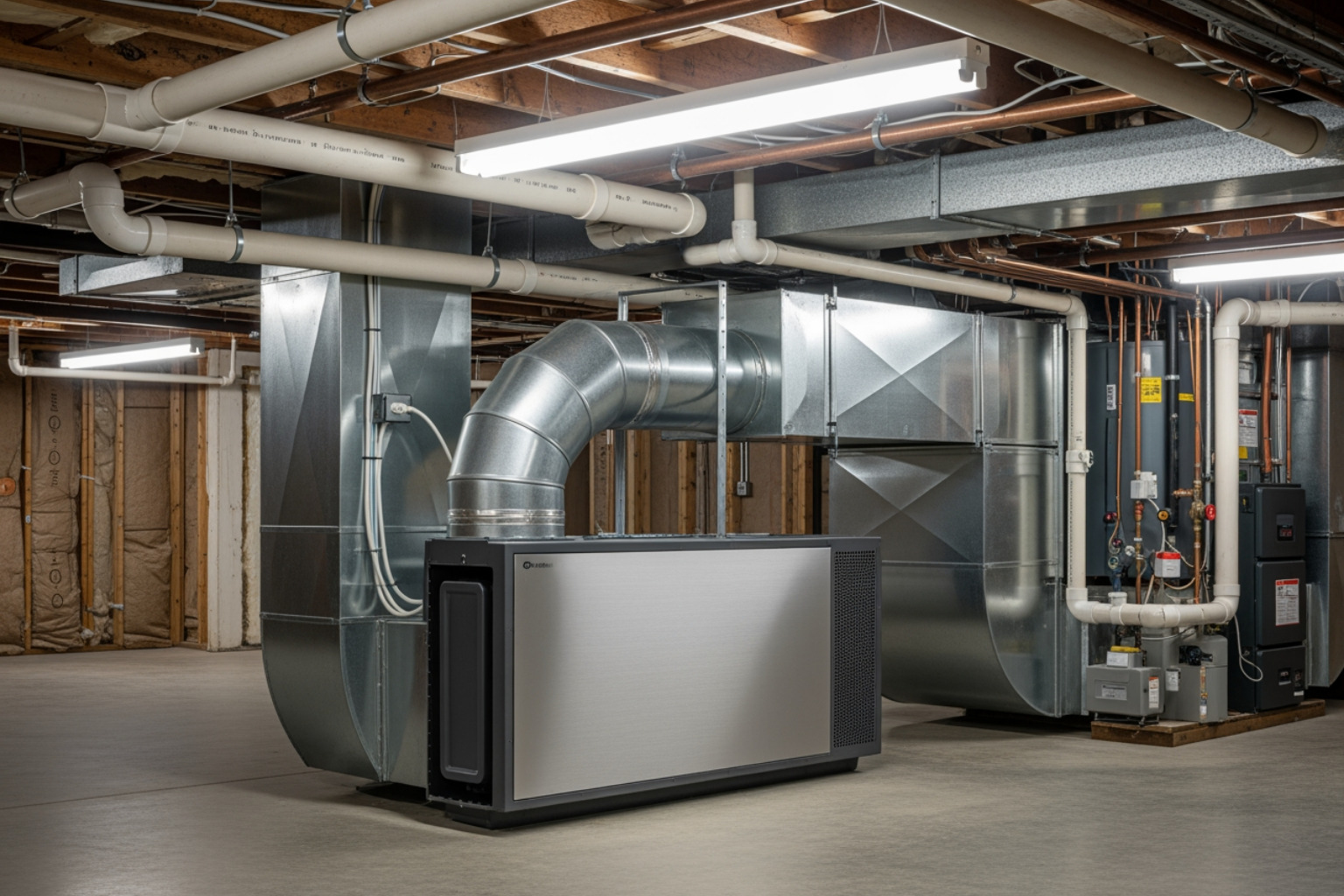
Air Purification: Adding an Extra Layer of Cleanliness Air purifiers add another layer of protection. Models with HEPA filters capture particles, while activated carbon filters adsorb gases and odors. For comprehensive treatment, a Whole-House Air Purifier integrated with your HVAC system is highly effective.
Humidity Control: The Mold Deterrent Control humidity to prevent mold. Use dehumidifiers in damp areas like basements, promptly fix all leaks, and ensure proper ventilation in bathrooms and kitchens. For more strategies, see our guide on How to Improve Indoor Air Quality.
Maintaining Healthy Air: Long-Term Strategies and Final Thoughts
Good indoor air quality requires an ongoing commitment. Regular monitoring and proactive measures are key to sustaining a healthy indoor environment.
How Often Should You Perform an Air Quality Check at Home?
The ideal frequency for your air quality check at home depends on your home and specific concerns.
- Routine Monitoring: Use a consumer monitor to track daily or weekly changes in PM2.5, VOCs, and CO2.
- Radon Testing: The EPA recommends retesting every two years, or annually if you have a mitigation system.
- Seasonally: Monitor particulates during allergy season to help manage symptoms.
- Event-Based Testing: Always test after specific events:
- After Renovations: To check for off-gassing VOCs from new materials.
- After Water Damage: To confirm no mold growth has occurred.
- When Moving: To conduct a comprehensive check before settling in.
- With New Health Symptoms: If your family experiences unexplained respiratory issues, headaches, or fatigue.
Understanding Your Options and Taking Action
This guide has empowered you with the knowledge to perform an air quality check at home and ensure your air is healthy. Poor indoor air is a silent but serious problem. With studies showing it can be up to 5 times more toxic than outdoor air, proactive monitoring is a necessity, not a luxury.
At GreenWorks Environmental, our New Jersey-based team of building biologists, hydrologists, and IAQ professionals specializes in solving complex moisture, odor, and mold issues. We provide detailed assessments and actionable solutions for your home.
Don’t wait for symptoms to appear. Take the first step toward a healthier home today.
Contact us for a comprehensive Air Quality Testing service and let our experts help you ensure your home is a sanctuary of clean, healthy air.
Appendix
References
- Indoor Environmental Quality. American Industrial Hygiene Association. (https://www.aiha.org/public-resources/consumer-resources/indoor-environmental-quality)
- Report on the Environment: Indoor Air Quality. U.S. Environmental Protection Agency. (https://www.epa.gov/report-environment/indoor-air-quality)
- Short-term radon testing is unable to predict seasonal variability in radon concentrations and subsequent health risks. Nature. (https://www.nature.com/articles/s41598-019-54891-8)
- Volatile Organic Compounds’ Impact on Indoor Air Quality. U.S. Environmental Protection Agency. (https://www.epa.gov/indoor-air-quality-iaq/volatile-organic-compounds-impact-indoor-air-quality)