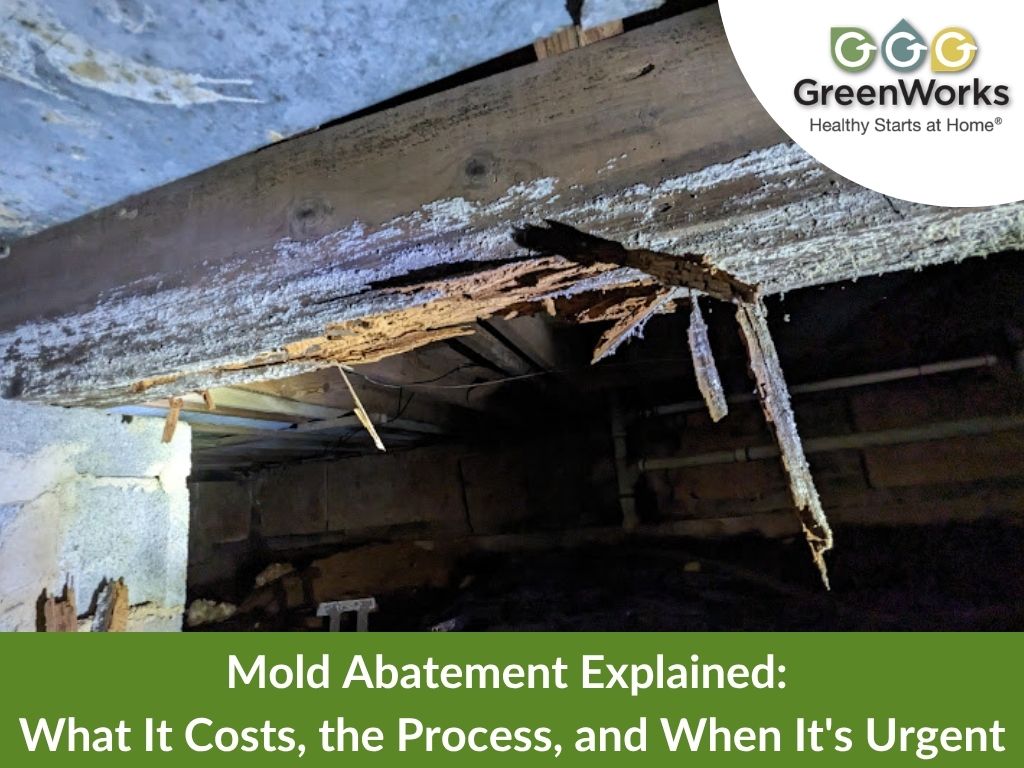
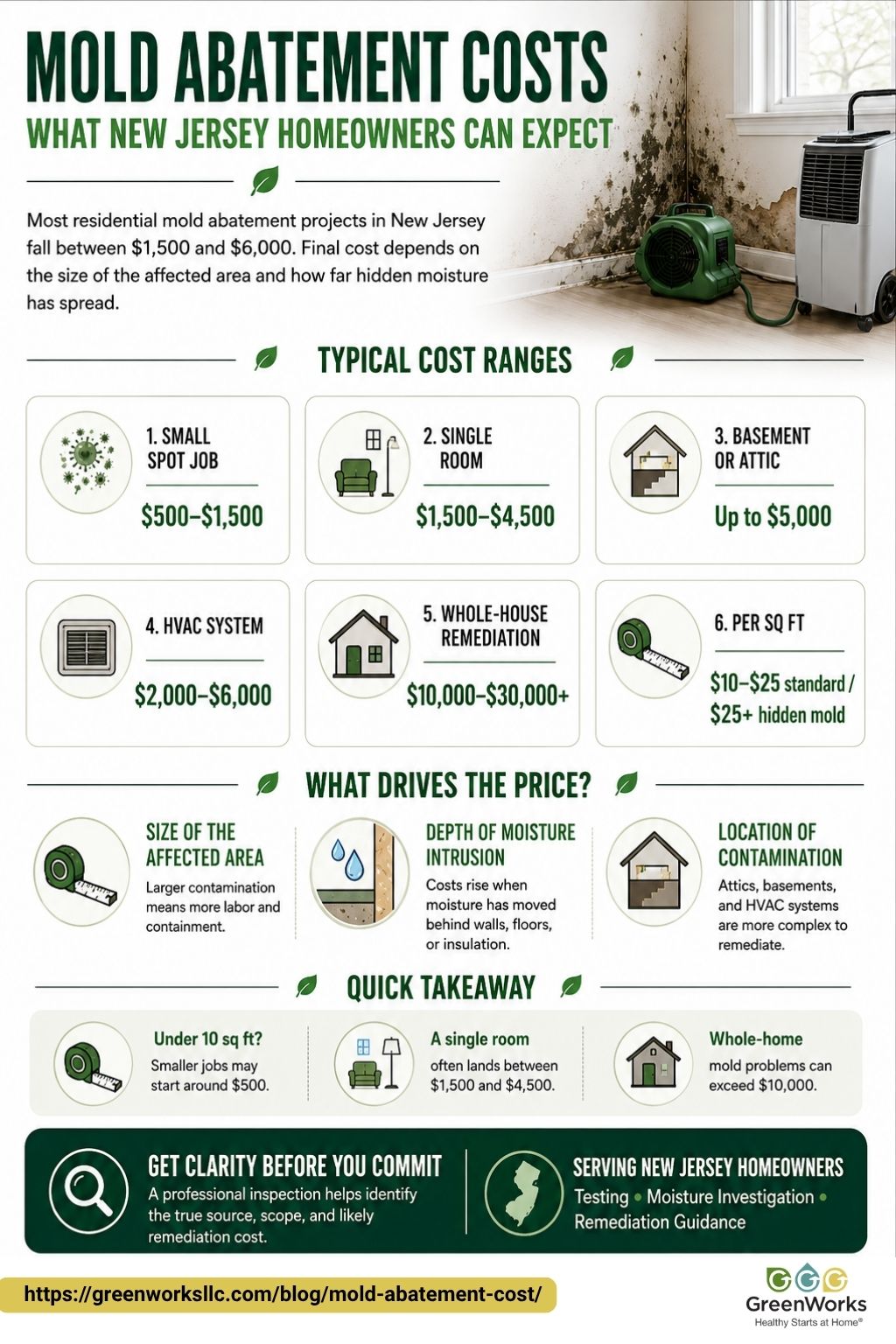
Mold abatement costs for most residential projects in New Jersey run between $1,500 and $6,000, though the final number depends heavily on the size of the affected area and how deep the moisture has traveled.
| Scope | Typical Cost Range |
|---|---|
| Small spot job (under 10 sq ft) | $500 – $1,500 |
| Single room (bathroom, bedroom) | $1,500 – $4,500 |
| Basement or attic | $500 – $5,000 |
| HVAC system | $2,000 – $6,000 |
| Whole-house remediation | $10,000 – $30,000+ |
| Per square foot (standard) | $10 – $25 |
| Per square foot (black mold / hidden) | $25+ |
Mold abatement for most New Jersey homes costs between $1,500 and $6,000, depending on the size of the affected area and how far moisture has traveled into walls, floors, or ductwork. A musty smell or a dark patch on a ceiling is often the visible edge of a larger hidden problem.
As a Building Biologist and the founder of GreenWorks Environmental, LLC, I have inspected New Jersey homes since 2007, and catching mold early is the biggest factor in keeping a project near the low end of those ranges. Many of my team are mold survivors, so we know the health side firsthand. Our services cover mold inspection and testing, moisture control, odor investigation, indoor air quality testing, and remediation.
Mold starts quickly, which is why the EPA advises drying wet materials within 24 to 48 hours. Professional abatement fixes the moisture source, contains the area, and removes contaminated materials. The sections below cover what drives your mold remediation cost in New Jersey, how inspection differs from remediation, the timeline, and when insurance pays.
Mold Abatement Cost in New Jersey: Pricing and Key Drivers
When you receive a quote for mold removal, it is easy to experience a bit of sticker shock. However, professional mold remediation is vastly different from spraying bleach on a bathroom tile. It is a highly specialized environmental construction process designed to protect your home’s air quality.
How much you will ultimately pay depends on several distinct variables, starting with where the mold is and how far the moisture has spread.
Why New Jersey Properties Face Unique Cost Pressures
In New Jersey, several regional factors influence the overall pricing structure of environmental services:
- The Age of the Housing Stock: Older homes across Monmouth, Ocean, Middlesex, and Burlington counties often have framing and plaster walls that absorb moisture deeply, which adds labor to the job.
- Coastal and High-Humidity Climates: Jersey Shore communities face constant salt-air moisture and seasonal humidity, which can accelerate spore colonization and prolong structural drying times.
- Regional Labor Rates: Local labor costs, strict environmental disposal regulations, and high overhead for certified technicians in the Tri-State area mean that local quotes reflect regional economic realities.
The containment practices professionals follow draw on the EPA’s Mold Remediation in Schools and Commercial Buildings guide, which sets out how affected areas should be isolated and cleaned.
Standard vs. Complex Remediation Scopes
The complexity of your mold issue dictates the level of containment and equipment required. The table below outlines how project scope changes with the severity of the contamination:
| Project Complexity | Containment Requirements | Equipment Needed | Typical Structural Impact |
|---|---|---|---|
| Standard (Localized) | Basic plastic sheeting barriers | HEPA vacuum, air scrubbers (1-2 days) | Surface cleaning, minor drywall removal |
| Complex (Hidden / Structural) | Multi-zone negative-pressure containment | Industrial dehumidifiers, multiple HEPA scrubbers, negative air machines | Extensive demolition of framing, subfloors, and plaster |
If you discover a mold issue and are concerned about the upfront cost, we offer flexible Financing Options so you can address the problem right away.
Average Mold Abatement Cost by Location and Square Footage
The physical location of the mold within your home heavily influences the final invoice. Different areas present unique accessibility challenges and structural considerations:
- Bathroom Mold: Typically the most straightforward to address. Often caused by poor ventilation or localized plumbing leaks, remediation is usually highly localized unless moisture has seeped behind the shower surround.
- Basement Mold: A very common issue in New Jersey homes due to foundation seepage and high soil moisture. Costs scale based on whether the basement is finished (requiring drywall demolition) or unfinished.
- Attic or Crawl Space Mold: These tight, low-clearance environments are highly labor-intensive. Technicians must wear full personal protective equipment (PPE) and work in tight, awkward spaces, which adds labor hours.
- HVAC System Mold: If spores colonize your ductwork or air handler, they can spread throughout your entire home. This requires specialized duct cleaning, sanitization, and containment procedures to prevent cross-contamination.
- Whole-House Remediation: This represents the highest tier of complexity, typically occurring after major flooding, prolonged roof leaks, or when a property has been left vacant without climate control.
Technician safety in these spaces follows OSHA’s safety bulletin on mold hazards, which covers protective equipment and exposure controls.
Hidden Factors That Drive Up Your Mold Abatement Cost
Beyond square footage, three critical factors can drastically alter your initial estimate:
- Mold Species: Strains like black mold (Stachybotrys chartarum) can produce mycotoxins, and the CDC notes that some people are more sensitive to mold exposure than others. Remediating these strains calls for stricter negative-pressure containment, heavier personal protective equipment, and independent clearance testing, which add to the project cost.
- Accessibility Challenges: If our team has to cut through plaster, access tight crawl spaces, or work on high vaulted ceilings, the additional time required to set up safe work zones will impact the final cost.
- Structural Damage: Mold digests organic materials like wood and paper. If a leak has been neglected, the structural integrity of your wall studs, subfloors, or ceiling joists may be compromised, requiring reconstruction and carpentry work.
Mold Inspection vs. Remediation: What’s the Price Difference?
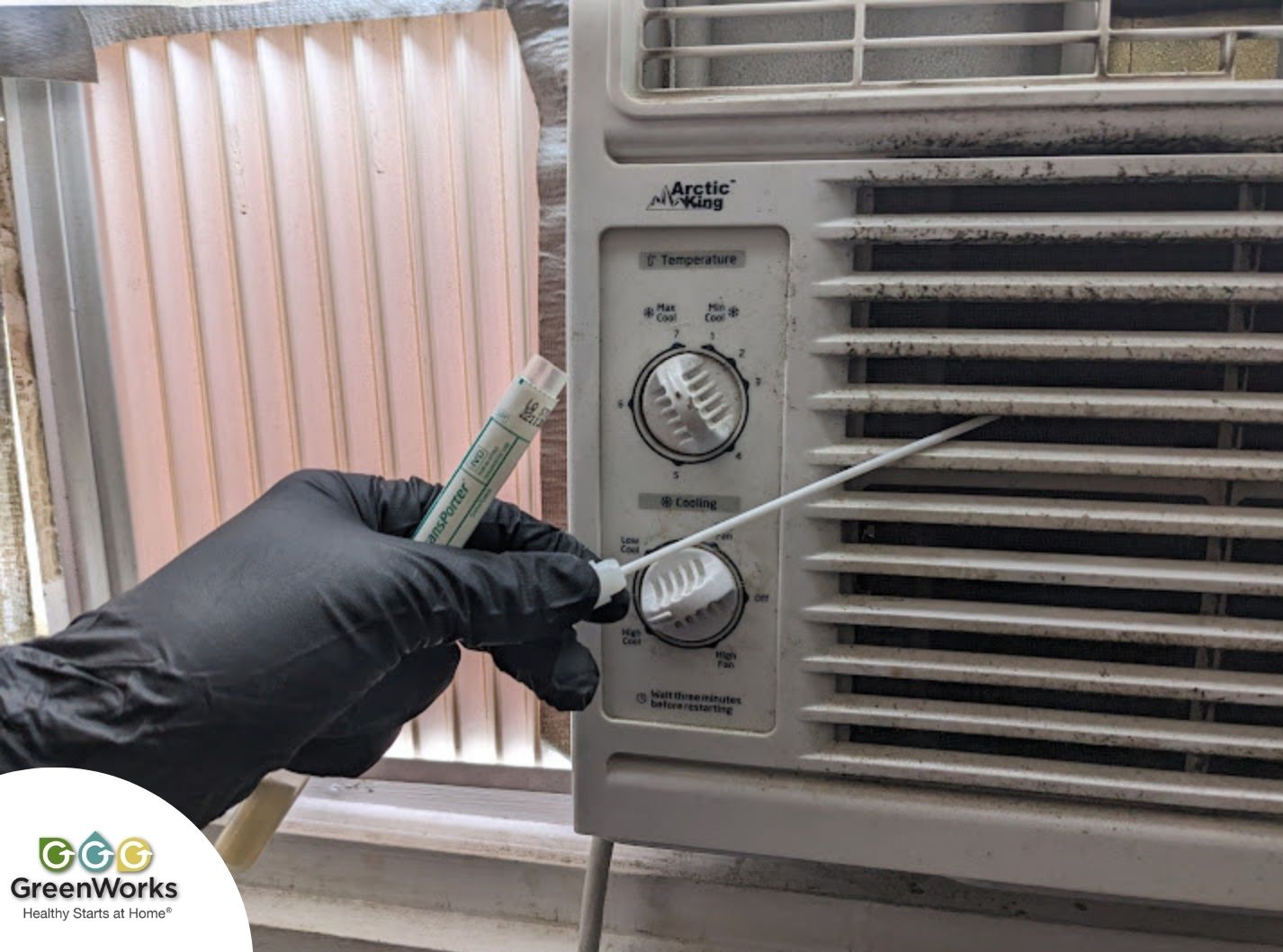
Wall mounted air conditioners can conceal hidden mold. Air quality sampling helps determine if it is the source. Photo by Victor Coppola with GreenWorks Environmental
One of the most common mistakes homeowners make is confusing a mold inspection with mold remediation.
- Mold Inspection and Testing: This is the diagnostic phase. An environmental specialist conducts a visual assessment, utilizes thermal imaging to map hidden moisture, and takes air or surface samples to identify the spore count and mold species.
- Mold Remediation: This is the physical cleanup, demolition, sanitization, and structural drying process.
The Importance of Independent Clearance Testing
We strongly recommend Post-Remediation Verification (PRV) testing. This is an independent air quality test conducted after the cleanup is complete and while the containment barriers are still in place.
Avoiding Conflicts of Interest
A reputable environmental firm keeps diagnostic testing and post-remediation clearance testing separate. At GreenWorks Environmental, an independent party conducts the final clearance test, so the results reflect the condition of your home rather than a grade we gave ourselves.
Additional New Jersey Environmental Services to Know
The Professional Remediation Process: When Is It Urgent and How to Handle It?
If visible mold covers more than 10 square feet, or if someone in the home has ongoing respiratory symptoms, treat the situation as urgent. The longer moisture stays in place, the further mold spreads into framing and drywall, and the larger the remediation scope becomes.
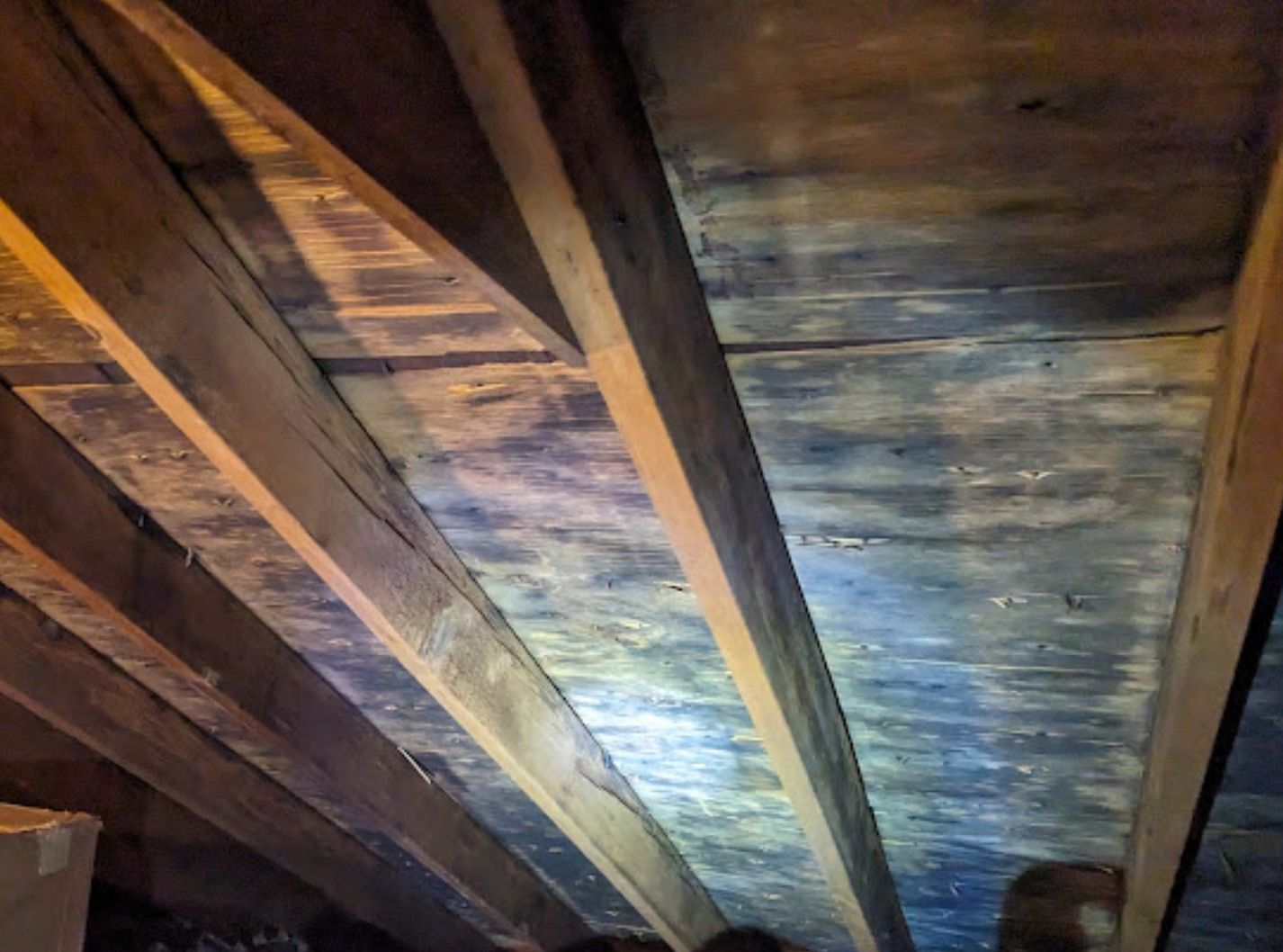
Mold growth on attic decking and trusses, indicating need for remediation. Photo by Victor Coppola at GreenWorks
Our science-backed approach to restoring your indoor air quality involves several critical steps:
- Moisture Source Identification: Remediation only lasts when the moisture source is resolved. Our team of expert building biologists and hydrologists uses advanced moisture meters and infrared cameras to trace the water leak or humidity issue to its origin.
- Containment and Negative Air Pressure: We seal off the affected space using heavy-duty plastic barriers. Negative air machines with HEPA filters pull air out of the containment zone and keep loose spores inside it.
- HEPA Filtration and Air Scrubbing: Industrial air scrubbers continuously cycle the air within the containment zone, capturing airborne spores, dust, and mycotoxins.
- Physical Removal and Sanitization: All porous materials that cannot be salvaged (such as contaminated drywall or carpeting) are carefully bagged and removed. Non-porous surfaces are scrubbed with professional-grade antimicrobials.
To learn more about our specific, health-focused protocols, explore our Services: Mold Removal page. To hire a qualified team with confidence, review our Tips in Choosing a Mold Remediation Contractor.
The Step-by-Step Professional Remediation Timeline
While every home is unique, a standard residential remediation project typically takes 1 to 5 days to complete:
- Day 1: Setup and Containment: Technicians establish plastic containment barriers, set up negative air pressure systems, and deploy commercial dehumidifiers to begin moisture control.
- Days 2-3: Demolition and Cleaning: Unsalvageable materials are carefully demolished, bagged, and disposed of. Remaining structural elements are HEPA-vacuumed and treated with EPA-registered antimicrobials.
- Days 4-5: Structural Drying and Clearance: Air scrubbers run continuously to clean the air. Once the moisture levels of the wood framing drop below safe thresholds, an independent clearance test is conducted.
For a more comprehensive look at what to expect during this timeframe, read our guide on How Long Does Mold Remediation Take?.
Does Homeowners Insurance Cover Mold Removal?
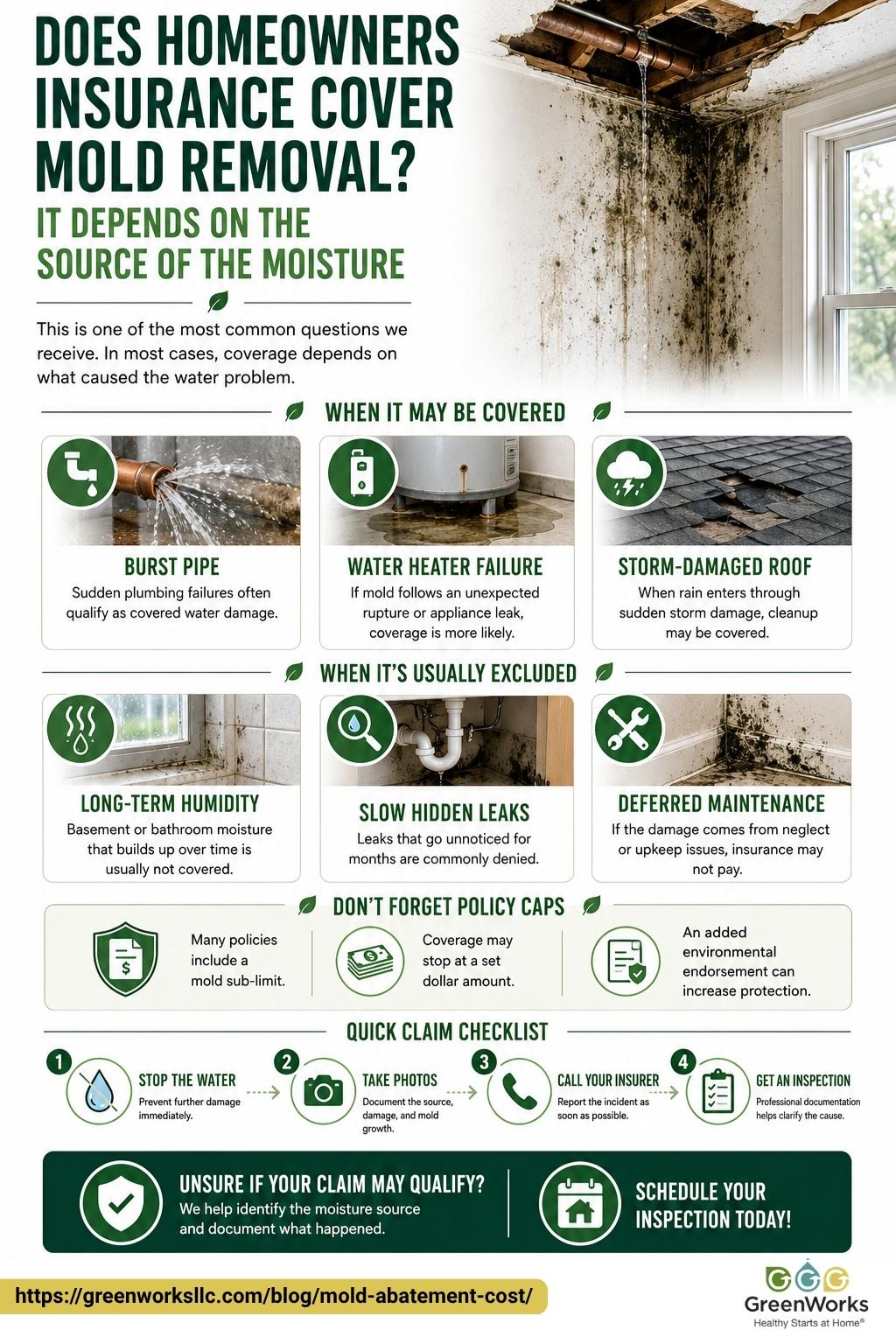
This is one of the most common questions we receive. The answer depends entirely on the source of the moisture:
- When It Is Covered (Sudden and Accidental): If a pipe suddenly bursts, a water heater ruptures, or a storm damages your roof, and mold develops as a direct result, your homeowners insurance will likely cover the cleanup.
- When It Is Excluded (Gradual or Maintenance Issues): If the mold is the result of long-term basement humidity, a slow leak that went unnoticed for months, or deferred home maintenance, the claim will almost certainly be denied.
- Policy Caps: Even when covered, many standard policies carry a mold sub-limit, which caps coverage at a specific threshold unless you have purchased an additional environmental endorsement.
To understand how to document your claim and communicate effectively with your adjuster, refer to our detailed guide: Does Homeowners Insurance Cover Mold?.
DIY vs. Professional Mold Abatement: When to Call the Experts
According to the EPA, homeowners can typically handle mold cleanup themselves if the affected area is less than 10 square feet (roughly a 3-foot-by-3-foot patch) and is limited to non-porous surfaces such as tile or metal.
However, you should always hire a certified professional if:
- The mold covers an area larger than 10 square feet.
- The mold is located inside your HVAC system or ductwork (requiring an IAC2 Certified indoor air quality professional).
- The moisture source is unknown or hidden behind walls.
- Family members suffer from asthma, severe allergies, or compromised immune systems.
The GreenWorks Difference
At GreenWorks Environmental, we look at how your home affects your health as well as at the structure itself. As PMII and EPA Certified Green Professionals, many of us are mold survivors, and we combine that experience with training in building biology and hydrology to deliver lasting, science-based solutions.
For commercial properties or real estate transactions requiring extensive environmental due diligence, we also provide comprehensive Phase 1 Environmental Assessment services to protect your investments.
Key Takeaways: Home Environmental Cost Control
- Containment Sets the Baseline Price: Small, localized projects require basic physical plastic boundaries, while complex sub-surface infestations demand multi-zone negative air pressure containment arrays that increase physical labor hours.
- Aging Structures Multiply Complexity: Properties featuring older timber framing or porous lath-and-plaster walls absorb moisture deeply, requiring extensive drying cycles and careful material extraction.
- HVAC Mold Spreads Through the Whole House: Mold in the ductwork or air handler travels to every room the system serves, so it needs duct cleaning and containment to stop cross-contamination.
- Insurance Covers Sudden Damage Only: Policies typically cover mold remediation caused by sudden, accidental events like burst pipes and deny claims caused by long-term, unaddressed basement humidity.
- Independent Testing Keeps Results Honest: Clearance testing should be done by a party that did not perform the cleanup, while the containment barriers are still in place.
Scrubbing surface stains or ignoring a musty odor leaves the moisture source in place, and mold keeps feeding on the wood and drywall behind it. Once you are ready to stop the temporary surface fixes and deal with the moisture at its source, contact GreenWorks to book your inspection.
References
- EPA- United States Environmental Protection Agency: A Brief Guide to Mold, Moisture, and Your Homehttps://www.epa.gov/mold/brief-guide-mold-moisture-and-your-home
- U.S. Environmental Protection Agency (EPA)- Mold Remediation Protocols for Schools, Commercial, and Residential Structures: https://www.epa.gov/mold/mold-remediation-schools-and-commercial-buildings-guide
- Occupational Safety and Health Administration (OSHA)- Workplace Environmental Hazards, Mold Assessments, and Personal Protective Equipment Resources: https://www.osha.gov/publications/shib101003