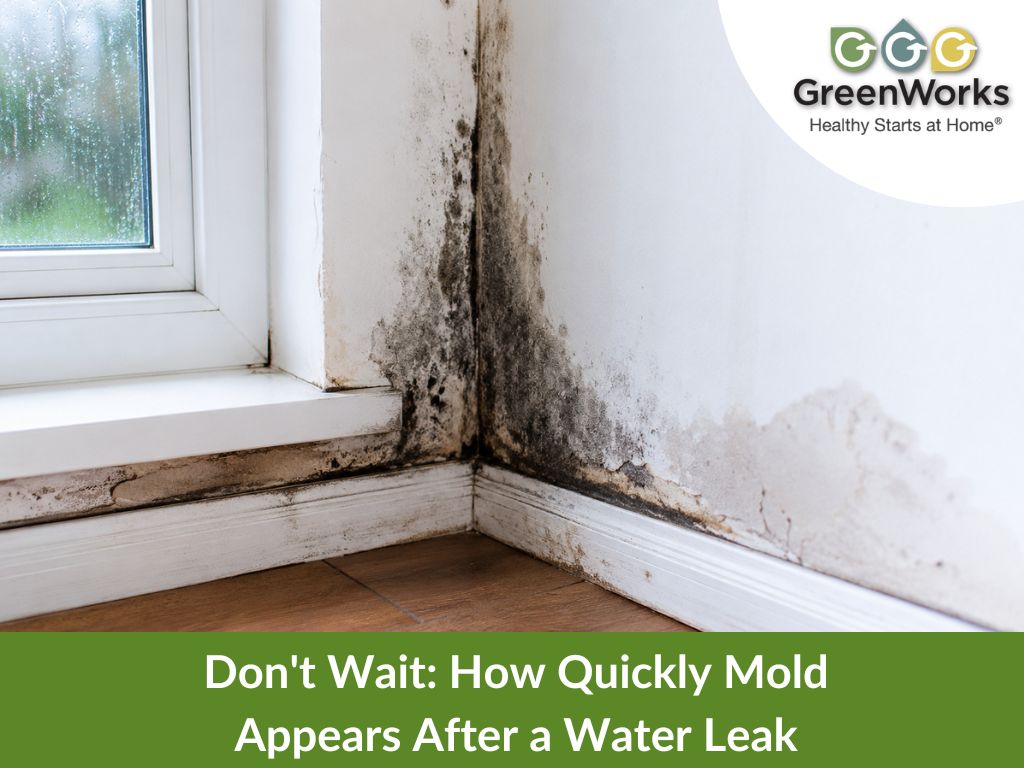
This surface stain is just the tip of a structural iceberg hiding behind the drywall. Because mold anchors itself deep within baseboards, professional intervention is vital to neutralize the hidden root cause and keep your breathing air safe. Photo by Victor J. Coppola with GreenWorks Environmental, LLC.
Why Every Minute Counts After Water Damage
Mold begins growing almost immediately after water exposure. Within hours, spores are activated by the moisture and begin to spread, turning what may seem like a minor leak into a major issue before you even realize it.
Mold growth follows a fast timeline:
- 0-24 Hours: Spores activate and absorb moisture.
- 24-48 Hours: Microscopic germination begins (not yet visible).
- 3-7 Days: Small visible colonies start appearing.
- 1-3 Weeks: Established growth with musty odors and potential health risks.
In New Jersey’s humid summers, mold often develops following water damage, especially in older homes. The EPA confirms that mold growth becomes nearly certain if water-damaged materials aren’t dried within 24-48 hours, emphasizing the need for fast action.
Homeowners frequently focus on visible water damage but overlook hidden moisture in walls, floors, or HVAC systems. This hidden moisture is where mold can thrive undetected, spreading spores throughout the home.
This guide focuses on the scientific timeline and conditions that cause mold to grow following a water leak. For testing the air in your home, see our Indoor Air Quality Testing guide. For extraction of standing water, read our Water Damage Restoration guidelines. For professional remediation, visit our Mold Removal Services page.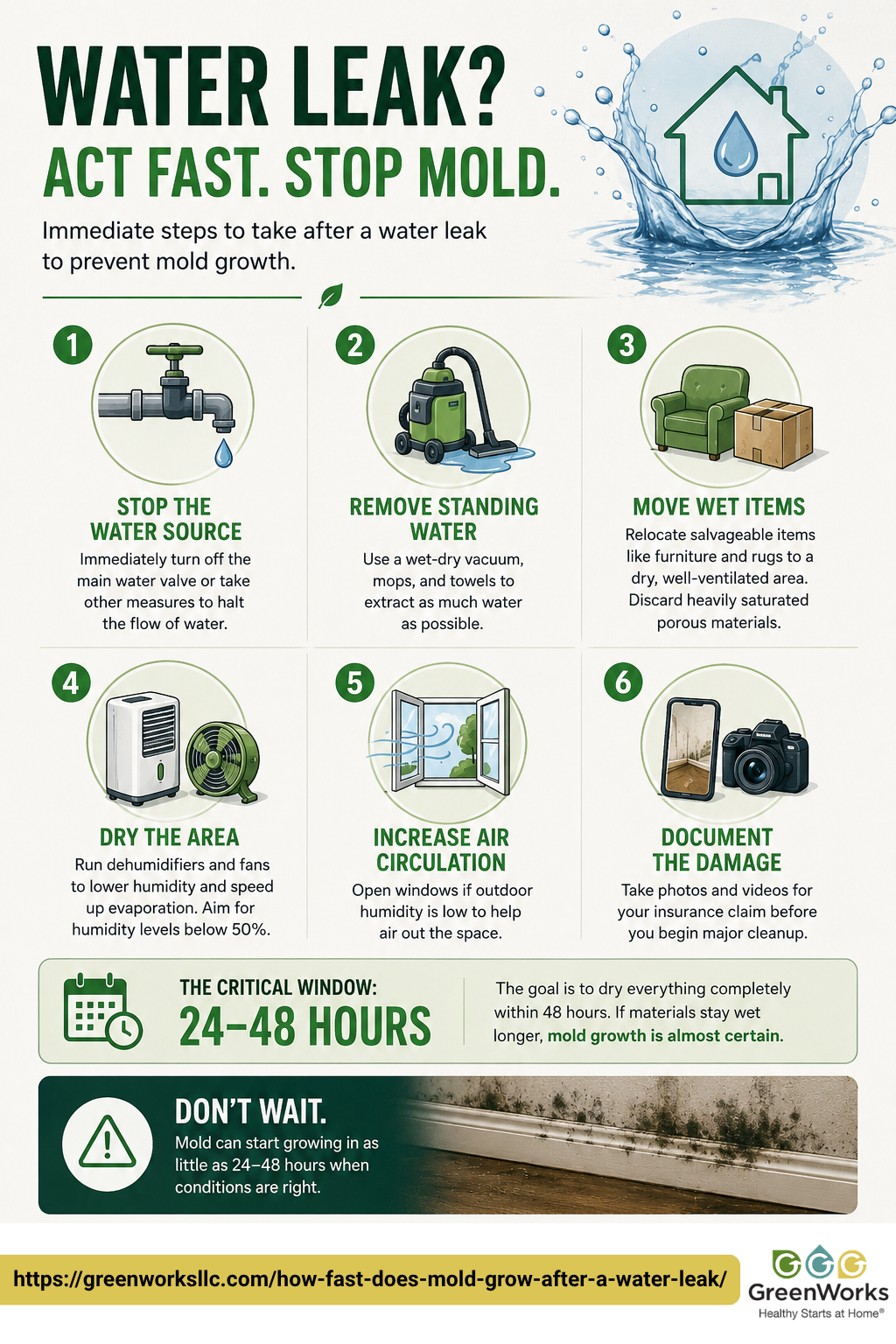
The Critical 24-48 Hour Window After a Water Leak
Mold growth is more than just a cleanup problem; it’s a serious health concern, especially for individuals with asthma or allergies. According to the EPA and FEMA, mold can begin growing within 24-48 hours of water exposure. Delaying action can lead to widespread mold growth and expensive remediation.
The Timeline of Mold Growth and Contributing Factors
Mold grows quickly when the right conditions are met. Mold spores are always present, awaiting moisture to activate them. A small leak provides the necessary moisture to turn dormant spores into growing colonies, which can damage both your home’s structure and air quality.
The Science of Mold: Ideal Conditions for Growth
Mold requires four key elements to grow:
- Moisture: The most crucial factor. Mold cannot grow without water from leaks, floods, or even high humidity. The EPA advises that mold can grow if water-damaged areas are not dried within 48 hours.
- Food Source: Mold feeds on organic materials common in homes, including drywall, wood, paper, insulation, carpet, and dust.
- Temperature: Mold thrives in temperatures between 60°F and 80°F, a range common in most homes.
- Time: While it needs time to establish, the process is surprisingly fast, often measured in hours.
Stagnant air and darkness also promote faster mold growth, turning a damp, poorly ventilated basement into a perfect breeding ground.
A Day-by-Day Timeline: From Spore to Visible Colony
The initial stages of mold growth are invisible, which is why the answer to how fast mold grows after a water leak often surprises homeowners.
Mold-covered bathroom trim was removed after a water leak, showing severe wood rot and contamination. Photo by Victor J. Coppola @ GreenWorks Environmental, LLC
- 0-24 Hours: Spores activate. Dormant spores land on wet surfaces and absorb moisture, starting their metabolic processes.
- 24-48 Hours: Germination begins. In this critical window, spores germinate and send out microscopic, thread-like hyphae. This growth is not yet visible, but it’s the point of no return for simple prevention.
- 3-7 Days: Visible spots appear. The hyphae form a network (mycelium), becoming visible as small, discolored spots. You may also notice a musty odor, a key indicator of hidden mold.
- 1-3 Weeks: Mold becomes well-established. The colony is now clearly visible and spreading. The musty smell is more pervasive, and the mold can begin to damage materials and produce mycotoxins, increasing health risks.
How Building Materials and Humidity Influence Growth Speed
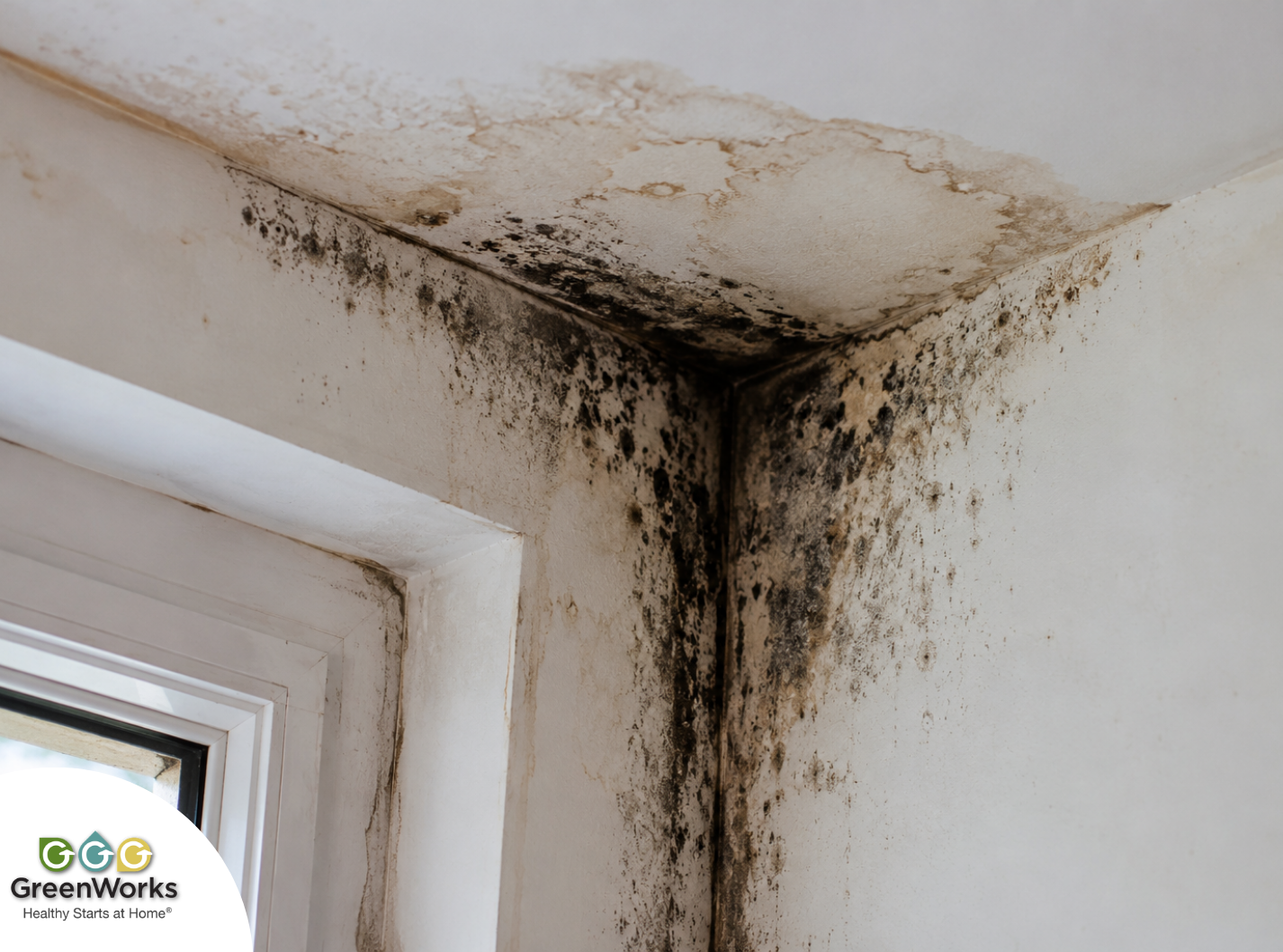
This overhead bloom acts as a biological launchpad, letting gravity scatter invisible spores directly into your breathing zone. Safely halting this airborne threat requires specialized professional containment to truly restore a healthy indoor environment. Photo by Victor J. Coppola with GreenWorks Environmental, LLC.
The type of material affected by water influences how quickly mold grows:
- Porous Materials: Drywall, wood, insulation, and carpet absorb and hold water, creating an ideal breeding ground for mold.
- Non-Porous Materials: Metal, glass, and hard plastics are more resistant. Mold can grow on surface grime but doesn’t penetrate the material itself.
High indoor humidity (above 60%) accelerates mold growth, especially in humid areas like New Jersey. Poor ventilation in basements and bathrooms worsens the issue. The type of water also impacts mold growth:
- Clean Water: From a supply pipe. Still a mold risk but has fewer contaminants.
- Gray Water: From appliances or clean toilet overflows. Contains nutrients that accelerate mold growth.
- Black Water: From sewage or flooding. It is highly contaminated and requires immediate professional water damage restoration due to severe health risks.
Scientific studies confirm that different mold species have varying growth rates depending on the material and environmental conditions. Some aggressive types can colonize visibly within days under optimal conditions, underscoring the complexity of mold growth and the need for expert assessment.
Your Action Plan: From Immediate Cleanup to Professional Help
A quick, thorough response to a water leak can prevent mold from taking hold. Delaying action or underestimating moisture levels can lead to contamination, health risks, and costly repairs. It’s crucial to know when to act and when to call a professional for help.
Immediate Steps to Take After a Water Leak to Prevent Mold
The 24 to 48-hour window is critical. Here’s what to do immediately:
- Stop the Water Source: Immediately turn off the main water valve or take other measures to halt the flow of water.
- Remove Standing Water: Use a wet-dry vacuum, mops, and towels to extract as much water as possible.
- Move Wet Items: Relocate salvageable items like furniture and rugs to a dry, well-ventilated area. Discard heavily saturated porous materials.
- Dry the Area: Run dehumidifiers and fans to lower humidity and speed up evaporation. Aim for humidity levels below 50%.
- Increase Air Circulation: Open windows if outdoor humidity is low to help air out the space.
- Document the Damage: Take photos and videos for your insurance claim before you begin major cleanup.

The goal is to dry everything completely within 48 hours. If materials stay wet longer, mold growth is almost certain.
Understanding the Health Risks and NJ Regulations
Mold exposure is a significant health concern, especially for sensitive individuals. The CDC warns that mold can trigger symptoms such as nasal congestion, throat irritation, coughing, wheezing, and skin or eye irritation.
Children, the elderly, and individuals with asthma, allergies, or weakened immune systems are especially vulnerable to mold’s harmful effects.
In New Jersey, there is no single mold law. Still, landlords must provide safe, habitable housing, and that includes fixing serious mold issues. Nearby rules, such as NYC’s Local Law 55, show how strongly mold is now treated as a health hazard. For DIY cleanup, OSHA guidelines recommend personal protective equipment (PPE) to reduce exposure. That same safety-first approach matters during indoor air quality testing and remediation.
When to Call a Professional for Mold and IAQ Concerns
While immediate action is essential, some cases require professional help:
- Large-Scale Growth: The EPA recommends calling a professional if the moldy area exceeds 10 square feet (a 3×3 foot patch), as DIY cleanup can spread spores.
- Hidden Mold: If you smell a musty odor but see no mold, it could be growing behind walls or under floors. Our team of experts, including building biologists and hydrologists, can locate the hidden moisture source.
- Contaminated Water: If the leak involves sewage (“black water”), call professionals immediately. This water contains harmful pathogens that make DIY cleanup dangerous.
- Health Symptoms: If household members experience respiratory issues, allergies, or other symptoms, a professional assessment and indoor air quality testing are needed.
- Concerns About Older Materials: In older NJ homes, water may affect materials like vermiculite insulation, which should be treated as Asbestos Containing Material (ACM). An AHERA-licensed inspector is required for safe assessment and handling to prevent releasing hazardous fibers.
- Recurring Mold: If mold returns after you’ve cleaned it, the underlying moisture issue was not resolved. We identify and fix the root cause to prevent future growth.
Key Takeaways: Stopping Mold After a Water Leak
When a pipe bursts or a roof leaks, the clock immediately starts ticking. Understanding how fast mold grows allows you to prioritize rapid drying and prevent a minor plumbing issue from turning into a major environmental hazard.
- Act Within 48 Hours: Water-damaged materials must be completely dried within 24 to 48 hours to reliably prevent mold spores from germinating.
- Control the Environment: Immediately stop the water source, extract standing water, and use fans and dehumidifiers to drop the indoor humidity below 50%.
- Know Your Materials: Porous materials like drywall and carpet absorb water deeply and grow mold much faster than non-porous surfaces like tile or metal.
- Don’t Ignore Musty Odors: If you smell a musty odor within a few days of a leak but don’t see mold, it is likely growing out of sight behind baseboards, inside walls, or beneath flooring.
Suspect hidden mold growth after a recent water leak?
If you’ve suffered water damage in New Jersey and want to ensure your home’s air quality is safe, our certified experts can help.
References
- EPA – Mold:https://www.epa.gov/mold
- FEMA – Dealing with Mold and Mildew in Your Flood Damaged Home:https://www.fema.gov/pdf/rebuild/recover/fema_mold_brochure_english.pdf
- CDC – Basic Facts about Mold and Dampness:https://www.cdc.gov/mold/
- NYC HPD – Indoor Allergen Hazards (Local Law 55):https://www.nyc.gov/site/hpd/services-and-information/indoor-allergen-hazards-mold-and-pests.page
- OSHA – Mold Guidelines:https://www.osha.gov/mold