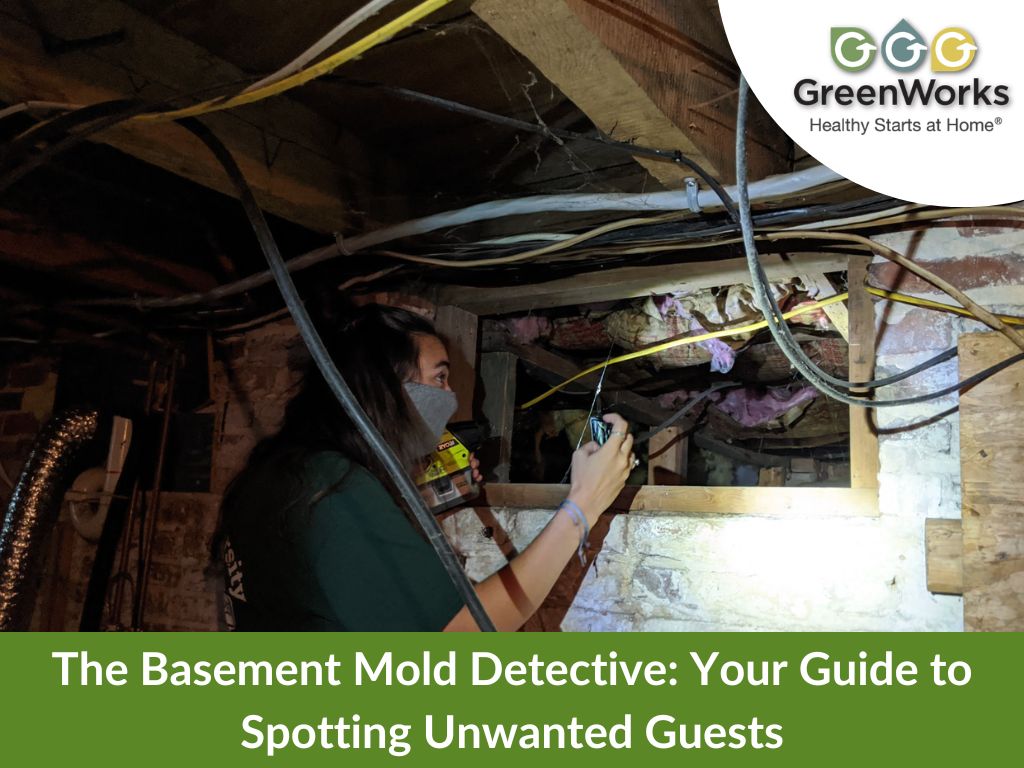
The image shows a GreenWorks employee professionally inspecting a basement using specialized tools for mold detection, ensuring a thorough and accurate assessment of the space. Photo by V.J. Coppola, GreenWorks Environmental LLC.
Is There Mold Hiding in Your Basement Right Now?
Mold in your basement can be sneaky and difficult to spot. Start by using these essential steps:
- A musty smell – If your basement smells damp, earthy, or like wet cardboard, mold may be growing even if you cannot see it yet.
- Dark spots or fuzzy patches – Look for black, green, brown, or white marks on walls, floors, wood, or around pipes.
- Water stains – Yellow, brown, or darker stains often mean moisture has been sitting there long enough for mold to grow.
- Peeling paint or bubbling walls – Paint that cracks, bubbles, or peels can be a sign that moisture is trapped behind the surface.
- White powder on concrete – This is often efflorescence, not mold, but it tells you water is moving through the wall, and mold may be nearby.
- Condensation or damp surfaces – If pipes, windows, or walls feel wet or collect moisture, the basement may be humid enough for mold.
- Health symptoms that get worse downstairs – More sneezing, coughing, headaches, or irritated eyes in the basement can be a warning sign of mold or damp air.
Many New Jersey homeowners don’t realize the danger lurking in their basements until a problem arises—like a strange musty smell, a persistent cough in your child, or paint inexplicably bubbling off the wall. These seemingly unrelated issues may actually be signals that mold is starting to grow in your basement.
These warning signs rarely happen by accident. In many basements, mold can begin growing within 24 to 48 hours after moisture gets in, especially during hot, humid summer weather. And once it takes hold, it does not simply fade away. It continues to spread, affecting indoor air quality, damaging materials, and raising health concerns.
Why are basements so prone to mold? They’re located near groundwater, which makes them susceptible to moisture. Poor airflow and limited visibility mean they often go unnoticed for weeks or months, allowing mold to thrive undisturbed. Mold takes full advantage of this neglect, often hidden behind walls and under flooring.
The challenge with basement mold is that it doesn’t always appear as obvious black patches. It can be hidden behind stored boxes, inside wall cavities, under old carpet, and even within HVAC ducts. Even before visible growth shows, mold releases microbial volatile organic compounds (MVOCs), gases that cause the unmistakable musty odor you often smell long before seeing the mold.
For families with young children, mold exposure is especially concerning. Infants and toddlers breathe faster than adults and spend more time near the ground, making them more vulnerable to airborne mold spores. Symptoms like constant coughing, a runny nose, or fatigue that improve when leaving the house may be signs that the mold in your basement is affecting your family’s health.
This guide will walk you through exactly how to find mold in your basement — what to look for, what tools to use, when to handle it yourself, and when to call in a professional like the team at GreenWorks Environmental.
How to Systematically Check for Mold in Basement Areas
When we inspect basements in Monmouth or Ocean County, we take a methodical, detective-like approach. Simply looking at the walls won’t uncover hidden mold colonies. A systematic approach is the best way to ensure you’re not missing any “unwanted guests” that are lurking out of sight.
Begin by clearing the perimeter of your basement. Mold thrives in stagnant air, often hidden behind cardboard boxes or old furniture pushed against exterior foundation walls. If you have boxes resting directly on a concrete floor, lift them up. Concrete is porous and can absorb moisture from the ground, providing the perfect breeding ground for mold spores at the base of the box.
We often find that the most significant issues are invisible to the naked eye. This is why we use tools like moisture meters and infrared cameras to find “cold spots” or high-moisture zones behind drywall. If you are conducting your own walk-through, look for “shadowing” on the walls or areas where the drywall feels slightly soft.
If you suspect something but can’t see it, you might need to look into mold sampling to identify the concentration of spores in the air. Just because you can’t see a “patch” doesn’t mean the air quality isn’t being affected. For more advanced cases, we specialize in detecting hidden mold that might be trapped in wall cavities or under flooring.
Recognizing Early Warning Signs and Health Risks
You don’t need specialized training to spot early signs of a mold problem. Often, your nose is your most reliable tool. That “basement smell” we all joke about? That’s mold off-gassing into the air. If the air feels heavy, damp, or smells like a wet dog, you likely have a mold colony nearby actively releasing spores into your home.
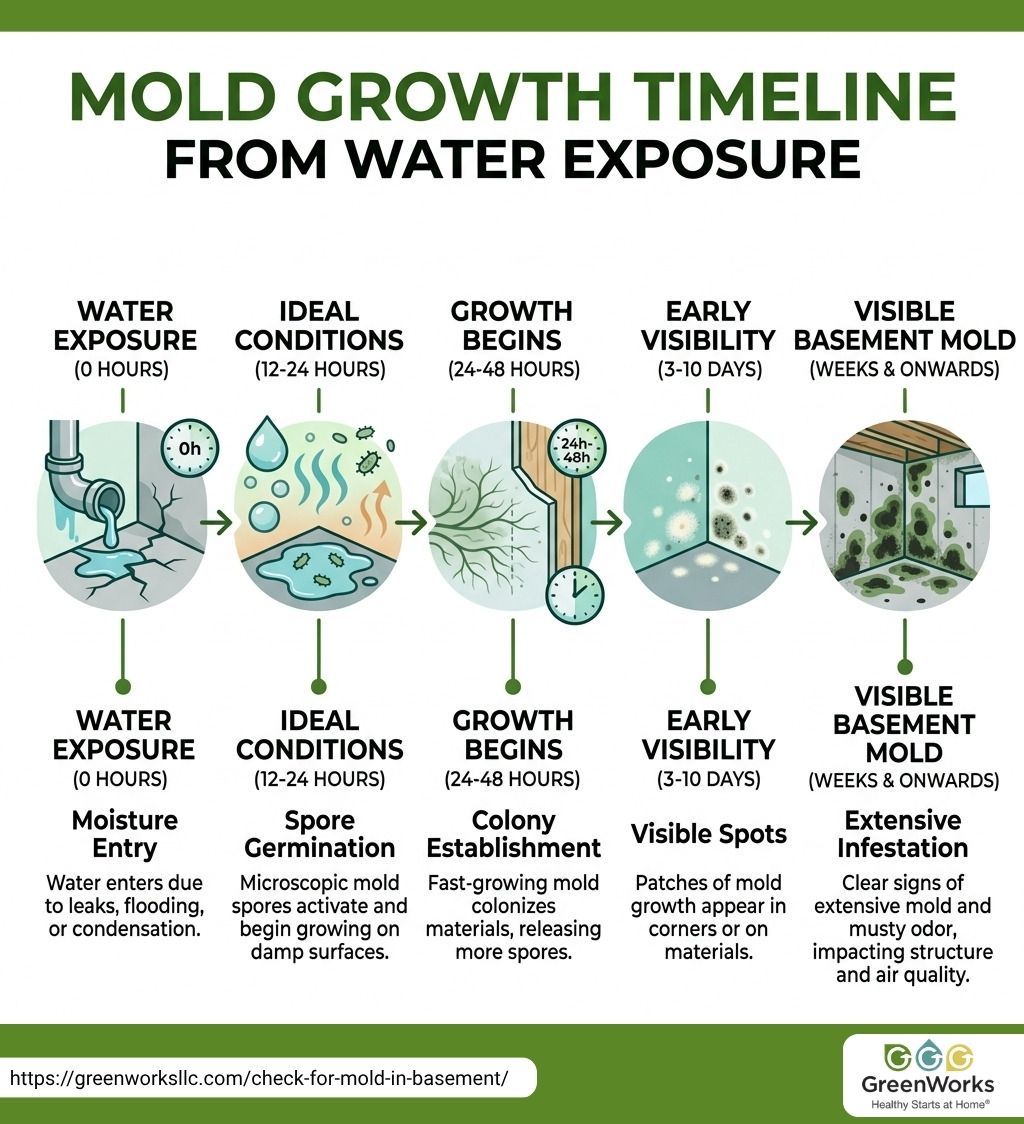
Infographic illustrating the timeline of mold growth stages following water exposure, highlighting key development phases.
Other physical signs to watch for include:
- Water Stains: Yellow, brown, or copper-colored stains on walls or ceilings.
- Peeling Paint: Moisture behind the paint causes it to peel or bubble.
- Efflorescence: This white, powdery salt deposit often gets mistaken for mold. While not mold, efflorescence indicates moisture is moving through your foundation, a serious sign that mold is a possibility.
The stakes are higher than just property damage. According to scientific research on the health impacts of dampness and mold, living in a damp environment is strongly linked to respiratory issues.
For our neighbors in places like Bergen or Essex County with older homes, this is a major concern for the littlest residents. Infants and toddlers have developing immune systems. Exposure to basement mold can lead to asthma flare-ups, chronic sinus infections, and unexplained headaches. If your child’s “allergies” seem to disappear during a weekend trip away from home, your basement might be the culprit. You can learn more about these risks in our breakdown of mold facts.
Tools and PPE for a Safe DIY Check for Mold in Basement Corners
Before checking mold in dark corners, it’s important to protect yourself. Disturbing hidden mold can release spores into the air, which are easily inhaled and can cause health issues.
Here’s the recommended personal protective equipment (PPE) when checking for mold:
- N95 or P100 Respirator: A regular dust mask won’t protect you from microscopic spores.
- Nitrile Gloves: Protect your skin from irritation.
- Safety Goggles: Choose ventless goggles to prevent spores from getting in your eyes.
- Disposable Coveralls: Essential for crawling into tight spaces or under stairs.
In terms of tools, a high-powered LED flashlight is your best friend. Shine it at an angle across surfaces to highlight the texture of mold growth. A moisture meter is also a fantastic investment for any homeowner; if a wall reads above 16-20% moisture content, mold is either there or on its way.
For a deeper dive into how the pros assess these environments, check out the scientific research on mold assessment tools provided by NIOSH. If you find your readings are high, we have developed several basement mold solutions tailored to the specific climate of New Jersey.
Visual Identification and the Bleach Swab Test
If you spot a suspicious area, how can you tell if it’s mold or just dirt? Mold typically appears as irregular patches that may be black, green, gray, or even white and “fuzzy” in texture.
Try this simple test: The Bleach Swab Test. Dip a cotton swab in a bleach solution (1 part bleach to 10 parts water) and apply it to the spot. If the color lightens or disappears, it’s likely mold. If it stays the same, it’s probably just dirt or grease.
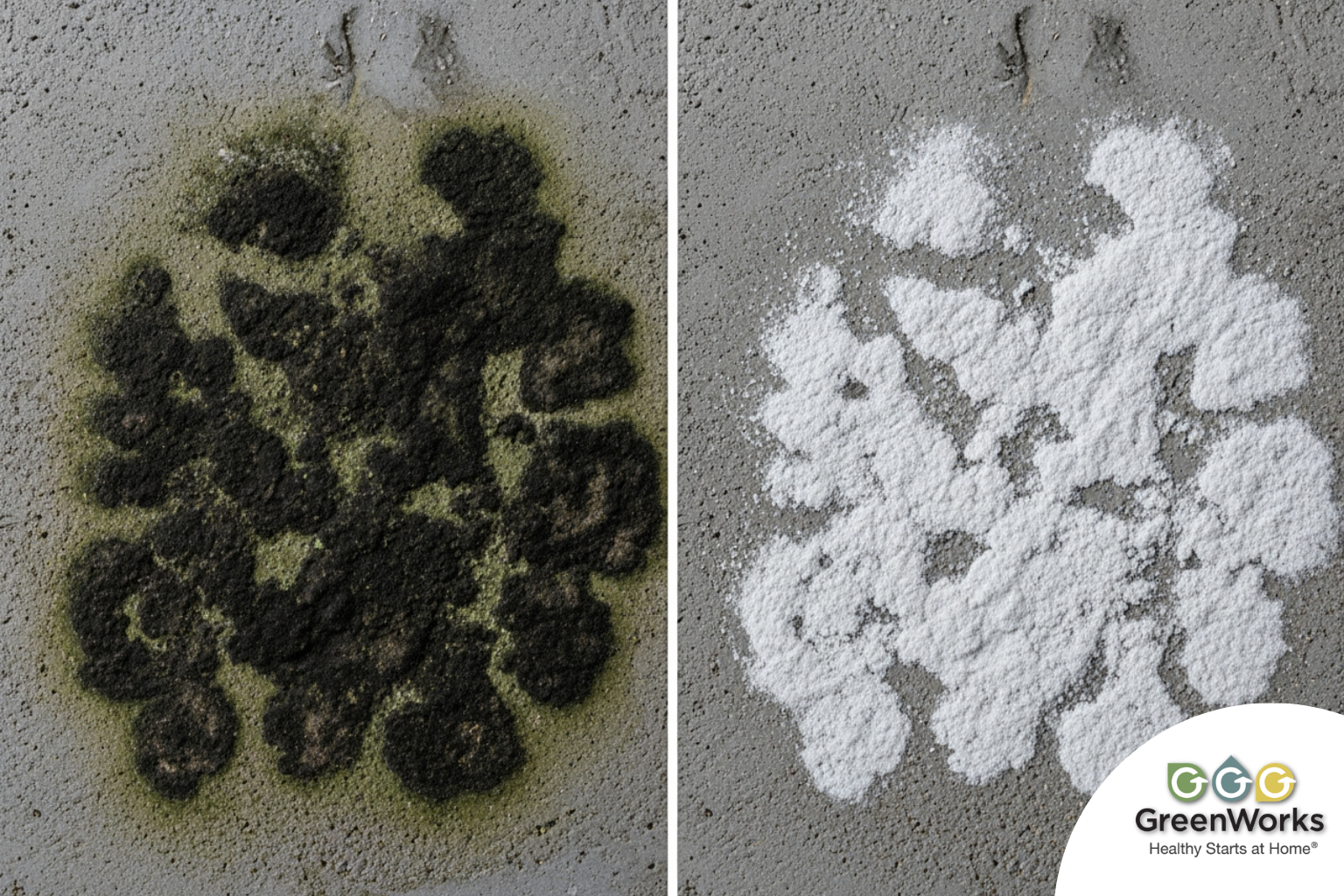
Split image showing untreated black mold on the left and treated white, powdery surface on the right. The tone is instructional and hygienic. Photo by V.J. Coppola, GreenWorks Environmental LLC.
Another test is the “Screwdriver Probe.” If you see dark spots on wooden floor joists or support beams, take a flathead screwdriver and gently press into the wood. If the wood is soft or the screwdriver sinks in easily, you aren’t just dealing with mold; you’re dealing with wood rot and potential structural compromise.
If you have more questions about what you’re seeing, our mold FAQs cover everything from “black mold” myths to the difference between mildew and mold.
Professional Remediation and Long-Term Prevention
Finding the mold is only half the battle. The real work is making sure it never comes back. In New Jersey, where humidity can stay above 70% for weeks, moisture control is a full-time job.
If you find a patch of mold that is larger than 10 square feet (roughly a 3ft by 3ft area), the EPA recommends calling in the experts. Professional remediation isn’t just about cleaning; it’s about containment. We use HEPA air scrubbers and negative air pressure to ensure that while we are cleaning your basement in Camden or Middlesex County, we aren’t accidentally sending millions of spores into your kitchen and bedrooms.
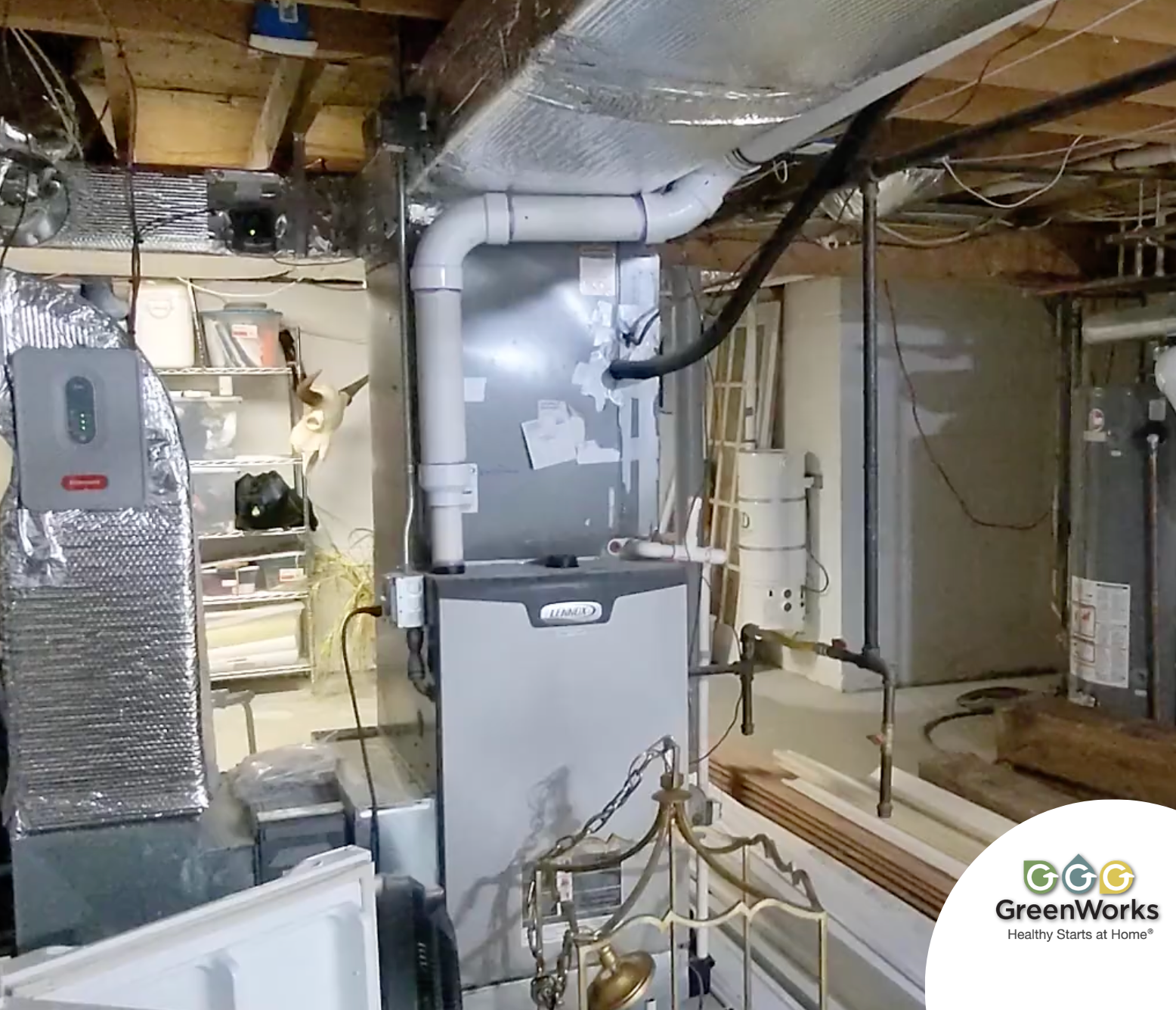
Basement with exposed pipes and furnace, surrounded by various tools and shelves. It appears orderly, conveying a functional and utilitarian tone. Photo by V.J. Coppola, GreenWorks Environmental LLC.
Once the mold is gone, we focus on successful remediation through moisture management. This might include installing a commercial-grade dehumidifier or checking your sump pump’s health. For those looking for official guidance, the EPA provides a guide on who can test and fix mold issues.
When to Move Beyond a DIY Check for Mold in Basement Spaces
We love the DIY spirit of NJ homeowners, but mold can be dangerous if handled incorrectly. You should stop what you’re doing and call a professional if:
- The area is large: Anything over 10 square feet.
- You suspect HVAC contamination: If you see mold near your vents or smell it when the AC kicks on, do not run the system. You could be “seeding” your entire house with mold.
- There is standing water or sewage: If your basement flooded with “black water” (sewage), this is a biohazard that requires specialized equipment.
- The mold keeps coming back: This means the root cause—the moisture source—hasn’t been solved.
| Feature | DIY Remediation | Professional Remediation |
|---|---|---|
| Area Size | Under 10 sq. ft. | Over 10 sq. ft. |
| Protective Gear | Basic N95, gloves | Full PPE, P100, Containment |
| Equipment | Scrub brush, detergent | HEPA Vacuums, Air Scrubbers |
| Verification | Visual check | Post-remediation air testing |
| Hidden Mold | Likely missed | Located via IR and moisture meters |
If you have a crawl space connected to your basement, mold doesn’t respect boundaries. We often find that basement issues actually start in the crawl space. We offer specialized crawl space remediation to ensure the “foundation” of your air quality is secure.
Moisture Control: The Ultimate Mold Deterrent
The secret to a mold-free basement isn’t a special spray; it’s dryness. Mold needs three things to grow: food (drywall, wood, dust), the right temperature, and moisture. You can’t remove the food or the temperature, so you must remove the moisture.
Our team of building biologists and hydrologists recommends a multi-pronged approach:
- Dehumidification: Keep your basement humidity between 30% and 50%. Anything over 60% is an open invitation for mold.
- Sump Pumps: Ensure your pump has a battery backup. NJ storms are famous for knocking out power right when you need your pump the most.
- Grading: Ensure the soil outside your home slopes away from the foundation (at least 6 inches of drop over 10 feet).
- Downspouts: Extend your gutters at least 6 to 10 feet away from the house.
- Vapor Barriers: In crawl spaces, a 6-8 mil plastic barrier is essential to stop moisture from rising out of the soil.
At GreenWorks Environmental, we don’t just clean up the mess. We identify the root cause of why the mold developed in the first place, so it does not return. Whether you are in Atlantic County or Warren County, we are here to help you breathe easier. If you have completed your DIY mold check in the basement and are concerned about what you found, contact us today to schedule professional mold testing and get clear answers.
References
- Who Can Test My Home or Clean, Fix, and Remediate My Home for Mold? – United States Environmental Protection Agency (EPA) (https://www.epa.gov/mold/who-can-test-my-home-or-clean-fix-and-remediate-my-home-mold)
- Health of Canadians in a Changing Climate: Advancing our Knowledge for Action – Government of Canada (https://lcipp.unfccc.int/node/514)
- Dampness and Mold Assessment Tool for General Buildings – National Institute for Occupational Safety and Health (NIOSH) (https://www.cdc.gov/niosh/docs/2019-115/default.html)